
Quilts to Bring Us Together
Published December 2nd, 2025 by Carl Atiya Swanson
In an expansive exhibition, quilter Carol Hancuh shares her own story of exploration, community, and connection with her late in life quilting boom.
First, some numbers. There are over 70 quilts in the exhibit Threads of Becoming at the Cora McCorvey Health and Wellness Center. The artist, Carol Hancuh, didn’t start quilting until she was retired and in her 60s. The earliest quilts on display are from 2012-2013, but the majority of the show is from the past five years, including major series Voting Line from 2020, and Inspired by Poetry from 2022-2023. And if you make the looping walk around the corridor of the McCorvey Center twice, to pay attention to both sides of the installation, you’ll get about 500 steps in.

Feed My People, Carol Hancuh, 2014. Image courtesy the artist
Next, some stories. In a preview of the exhibition, Hancuh walked the show, accompanied by her husband Lowell and curator Joan Vorderbruggen, highlighting her history, inspirations, and artistic explorations. Vorderbuggen also shared about setting for the exhibition. The Cora McCorvey Health and Wellness Center is in and of itself a unique space, owned by Minneapolis Public Housing Authority, and including clinics, physical therapy (hence the step count), hospice care, and the only memory care unit in public housing in the county.
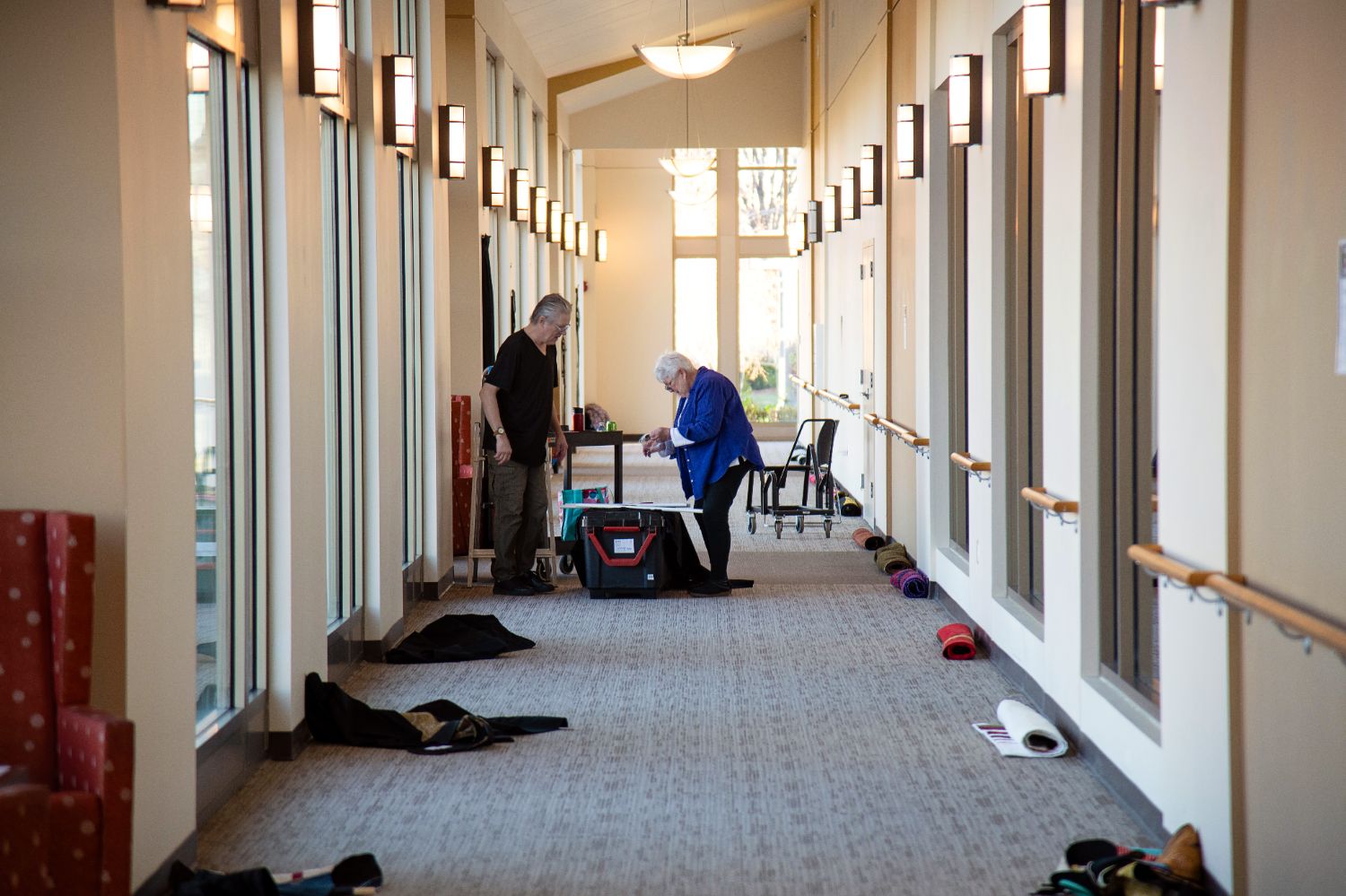
Install day. Photo by Sharolyn Hagen
That setting makes for a creative partnership that is resonant for Vorderbruggen. Along with her public art and curatorial background, she is by profession a nurse, and a caregiver. When asked what that context means to her in this role, she responds, “It’s everything. My grandpa lived in the public housing across for the central library, I grew up going to public housing.” She goes on to note that that the Center is a place to celebrate seniors, and “this is where I want to bring beauty, creativity, artwork, and it hasn’t been happening since pandemic.” That drive aligns with Vorderbruggen’s history of entrepreneurial collaborations with unlikely spaces and organizations. Her work with Artists in Storefronts and partnerships with organizations like the Hennepin Theater District and the Lake Street Council have created hundreds of opportunities for established and emerging artists alike over the years.
 Artist Carol Hancuh. Photo by Sharolyn Hagen
Part of the draw of Threads of Becoming is the emergence of Hancuh’s artistry later in life. Hancuh had a professional life as a Mask Layout Designer for the semiconductor industry, a key role in mapping out electronic circuits onto microchips, before retiring and finding quilting. It’s a skill that Vorderbruggen wryly notes set Hancuh up well for the layering and problem-solving of quilts. Hancuh is more demure about her drive to create, saying that it was a way to explore her creativity “once she had the time,” but it is clear that making quilts has become a core part of Hancuh’s life now. She drives a car with a custom license plate holder reading, “Behind every quilter is a huge pile of fabric,” and her husband Lowell jokes, “If we go past a sign with a quilt shop, we gotta stop.”
“I’m more of a storyteller, I don’t do abstracts very often,” Hancuh says of her artistic intentions, and that is borne out in the exhibition. The earliest works are quilts as you would expect them, patchwork squares put together, playing with color and pattern. “This is one of the first ones I’d done,” Hancuh remarked at 2012’s My Crazy Scrap Quilt, laughing to herself. “And I thought I’d done so well, and then it isn’t so square.” The early quilts are formal experiments – Yellow and Black plays with a color limitation of batik fabric swatches and a rule of no repeated patterns, there is an appliqué take on the classic bronze sculpture Seated Boxer after taking a class in Florence, Italy, and Spilled Vase starts to capture some formal dynamism with an upended vase and flowers tumbling out, including embellishments of ribbons and hand-sewn crystals that will make recurring appearances.
 In the Lake, Carol Hancuh, 2018. Image courtesy the artist
The storytelling instinct starts to emerge in earnest with the 2017 series Bus Stop, which break the rectangular form of the quilt and instead create full body portraits of people waiting for a bus. Most of the characters are fictions (and one is barista at a South Minneapolis coffee shop) but they come out of Hancuh’s curiosity and desire to play with form. “When you finish with the face you know who they are, how to dress them,” Hancuh states. The assembled crew all have backstories – Star, a distressed goth all in black with eyeliner and tattoos; Yana, a Russian émigré grandmother who will invite you in for tea; Friedrich, a pompous professor in tweed; Edna, a frumpy purple hat lady; Jesu, an itinerant worker. The stories of the individuals is part of Hancuh’s creative process, but the point is that everyone is there, together.
There is a thread of Hancuh’s Christian faith underpinning many of the quilts, and as the works progress, there is also a more explicit call for social justice and community support. 2018’s Feed My People features a group of diverse faces around a portrait of a Black veteran wrapped in an American flag, separated by a wall from a garden full of fresh foods. 2021’s Missing centers on a full portrait of a screaming child on a black background, body only outlined in thread to indicate disappearance, as a hand pulls the child away – Hancuh created the piece in direct response to the policies of migrant family separation. 2023’s Today I Will Only Attend to the Small Things, from the series Inspired by Poetry, features a gardening motif with abstracted, chaotic color schemes referencing racial strife, American political division, and the war in Ukraine, and an attempt to come to ordered understanding through mindful work.
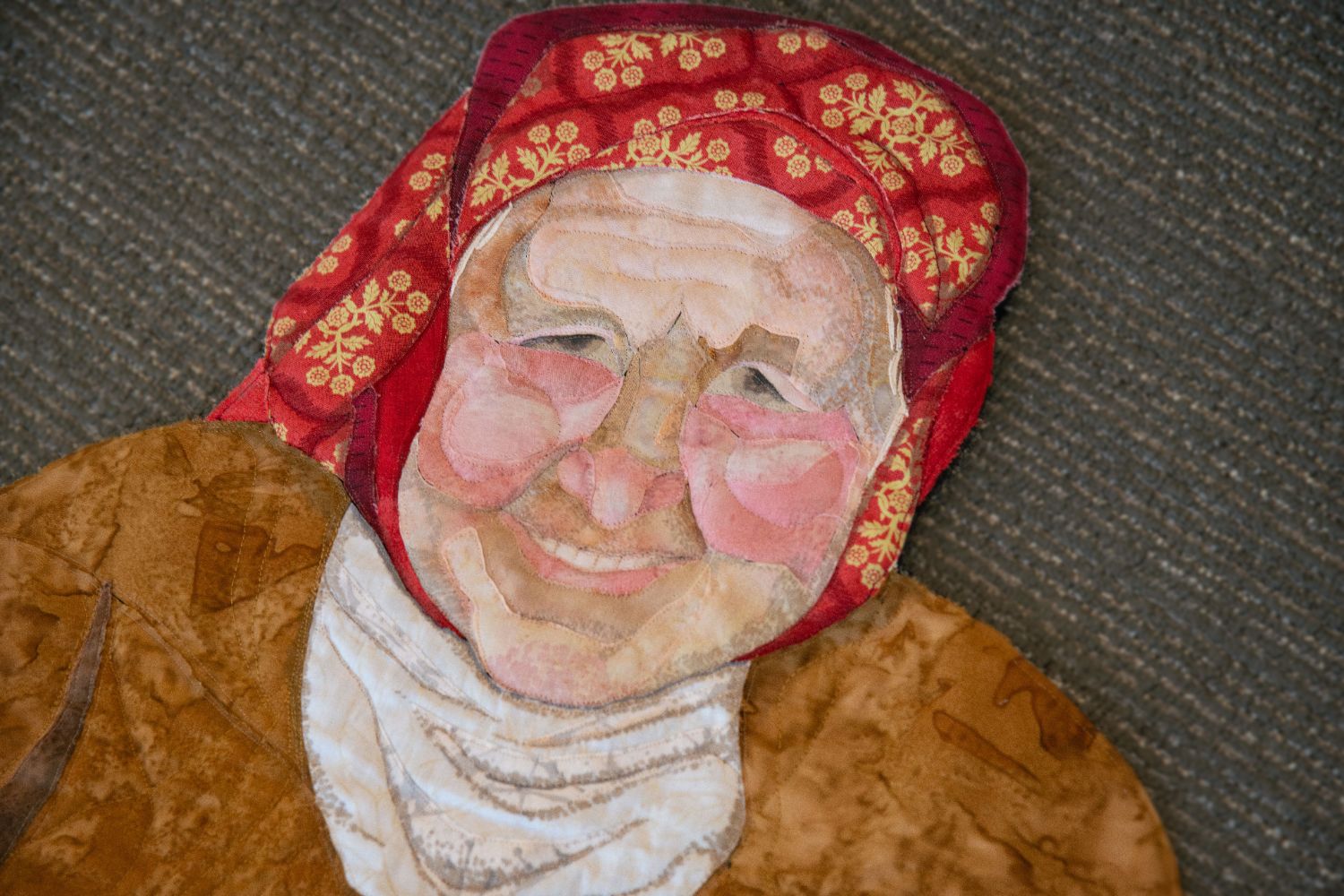
Detail view of Yana from the Bus Stop People series, 2018. Photo by Sharolyn Hagen
That sense of community and justice is the organizing theme for the largest body of work in the show, 2020’s Voting Line. Created in the buildup to the fraught election of that year, Voting Line expands the forms and portraiture of Bus Stop, imagining a line of voters waiting for their turn at the polls. There are recognizable figures – Susan B. Anthony, President Lyndon Baines Johnson, signer of the Voting Rights Act of 1965 – but for the most part, they are fictions or semi-fictions created by Hancuh. A medical professional, a chemo patient, a senior citizen using a walker all vote out of concern for healthcare costs. A retired teacher hopes his mentorship has made a difference. A naturalized citizen worries about immigration and families. The line of voters snake all the way around the hallways of the exhibition, satisfyingly ending with actual voting booths, and then Jack, smiling with his I VOTED sticker, and a note that he will spend the rest of the day driving souls to the polls.
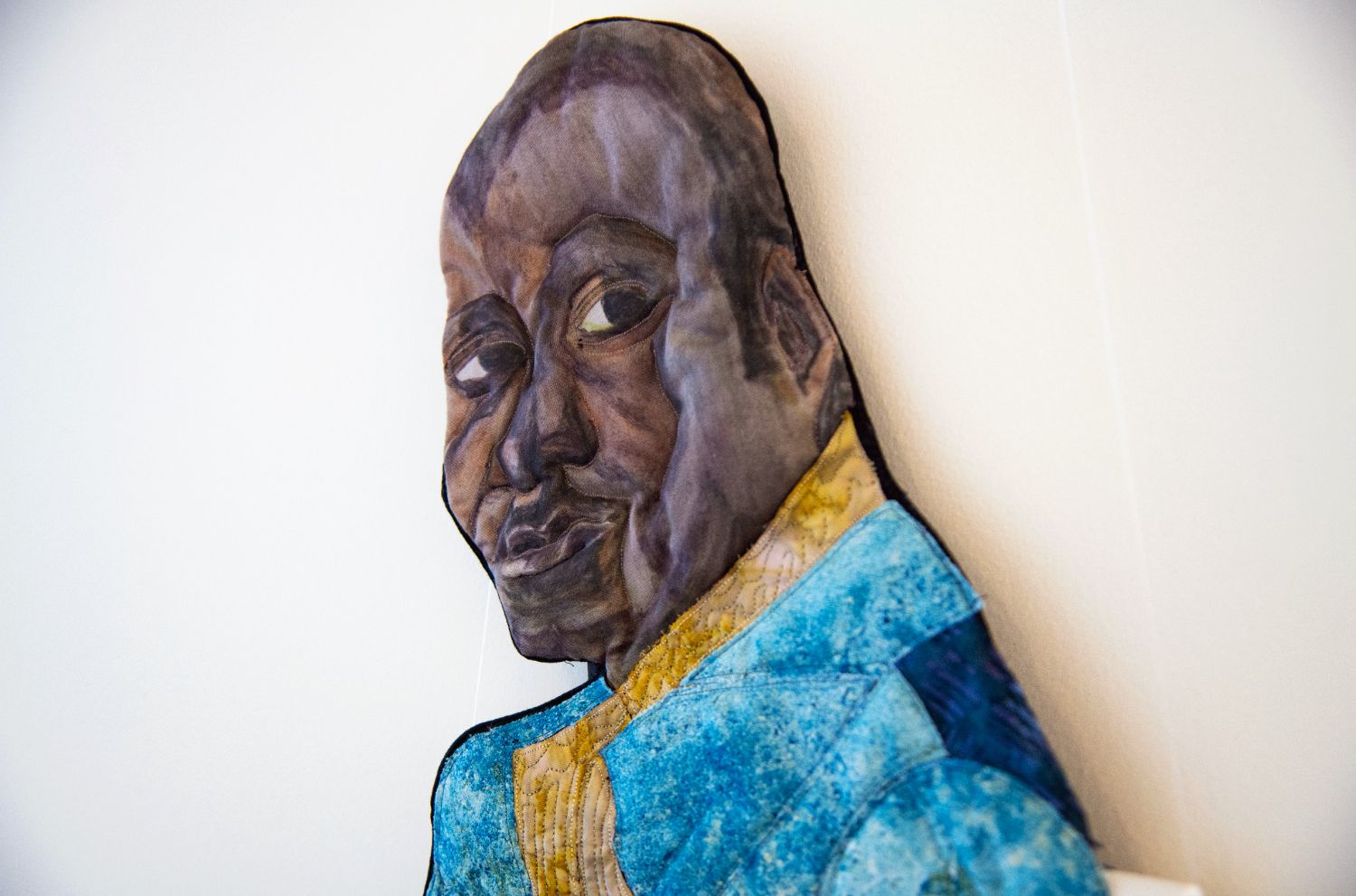
Detail View. Photo by Sharolyn Hagen
Quilting is an act of patience and problem-solving, and although Hancuh is firm that these are art works and not practical pieces, the form comes from a utilitarian impulse. The same could be said for our democracy, that it takes perseverance and patience, and we could use more intentional stitching together these days. Creative exploration and exchange is key to that, as Hancuh highlighted in 2022’s Illume, a series of broken yellow concentric circles on a black background. It is one of the more abstract pieces, counterbalancing the narrative works, but Hancuh says, “I named it Illume because I want people to feel like their light shines.” There’s not really a better place to contemplate that light and connection than in a publicly-accessible health and housing center.
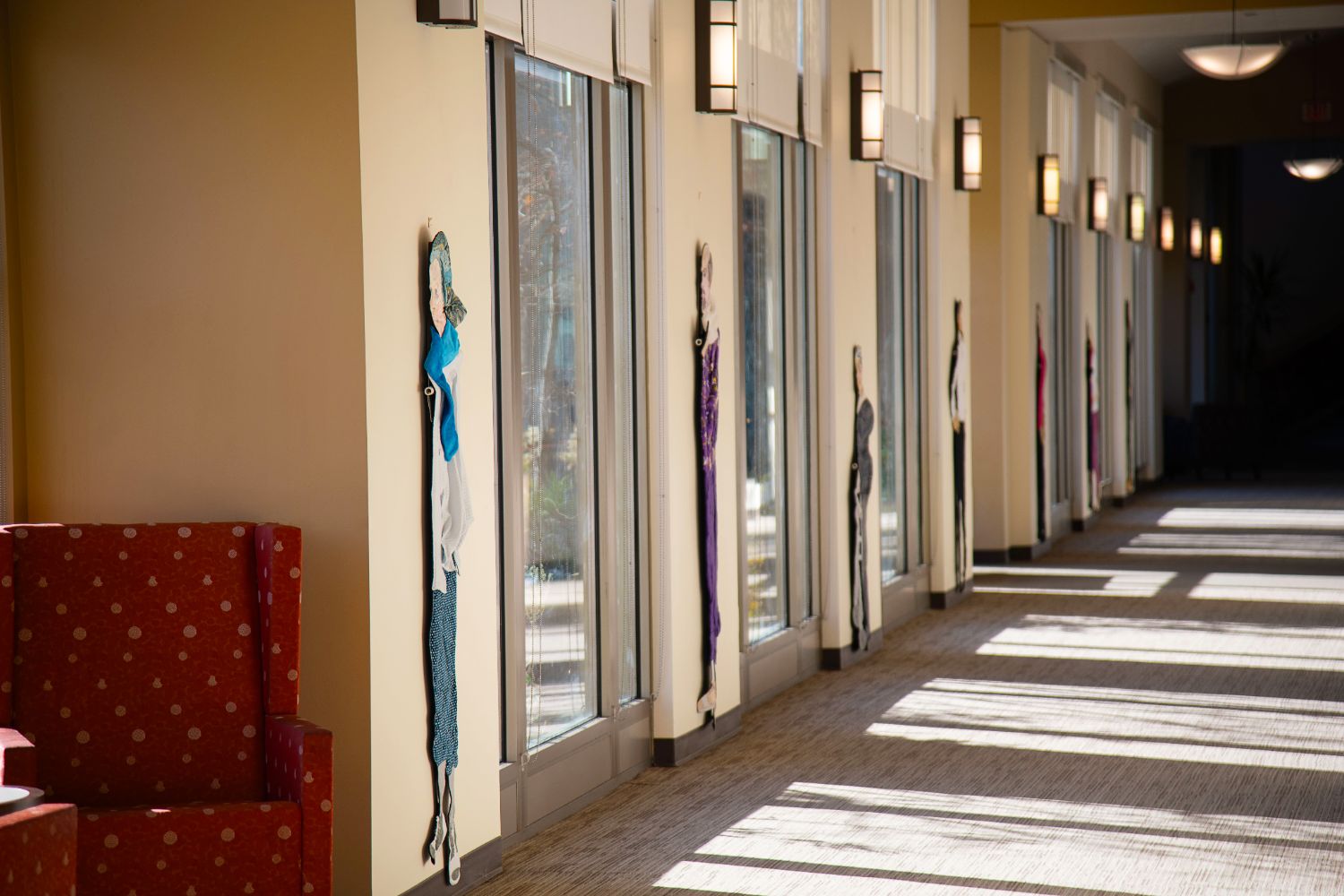
Installation view of Threads of Becoming. Photo by Sharolyn Hagen
In two years of partnering with McCorvey Center, this is the first solo show that Vorderbruggen has curated in the space. Usually the shows are big group affairs, and she would throw a big opening party for all the artists, but with the solo show opening in the holiday season, Vorderbruggen has instead arranged a Holiday Arts & Crafts Fair for Saturday, December 6th. In appropriate fashion, the show will include established artists (Amy Rice, Rozina Dee) as well as new vendors and artists who Vorderbruggen is mentoring. That Saturday promises to be packed day of celebrating community and creativity, fitting for the Center and its mission. Threads of Becoming will be on view through May 31, 2026, plenty of time to reflect on the growth and the stories, and get some steps in.◼︎
Threads of Becoming | Carol Hancuh is on view through May 31st, 2026 at Cora McCorvey Health and Wellness Center located at 1015 N 4th Ave, Minneapolis. A reception will be held this Saturday December 6th from 1-4PM alongside the popup artist market Holiday Gift Fair. You can see more of Carol Hancuh's work on her website.
Cover image photo by Sharolyn Hagen Photography
We can't do it without you.
Help keep independent arts journalism alive in the Twin Cities.
We can't do it without you.
Help keep independent arts journalism alive in the Twin Cities.