
On Museums and their Vital Role
Published August 20th, 2026 by William Gustavo Franklin Torres
A Guide for Artists and Art Lovers with William Gustavo Franklin
Banner Image: Installation view of 'How High the Moon' by Stanley Whitney at the Walker Art Center.
Hi, I’m William Gustavo Franklin, contributing writer for MPLSART.COM, and today I’d like to share a personal reflection on the vital role of the museum. Museums have a unique potential to be premier spaces to foster empathy, bring communities together, and be trusted sources of information. To be a museum is also to face criticisms and ongoing challenges.
◼︎ ◼︎ ◼︎ ◼︎ ◼︎
The Tate Modern in London opened on May 11th 2000. My father carved out time from a short visit to Rome for the Jubilee that year to bring his then 26 year-old son and art enthusiast to the critically praised newly opened museum in the UK. I had not experienced a world-class modern museum until then.
Not only the Tate Modern redefined urban museum design by transforming an old power station by the River Thames into a world-class art modern and contemporary art space, but also by arranging its collection thematically rather than chronologically (a mid-20th Century curatorial approach marked by a mainstream shift in 2000). I experienced how to freely connect deep ideas and see patterns across different eras through a personal journey (to my academic supervisors, I’m ok with linear art history too). I also saw this same world-class modern museum face major controversies in the years that followed, including delayed exhibitions, resignation of curators, to their workers striking because of low pay. I clearly had to grow up on my understanding of the museum world. The story of the Tate Modern resembles that of many other institutions.
 Image: Tate Modern: Light Show Opening Party (May 11 2000).
So much has been heavily debated about museums, from their crucial role preserving history, educating the people, and bringing communities together, all the way to ethical dilemmas, funding and political crises. It is true that many museums –like other institutions in our society– are implicated in capitalism, colonialism, and in profound power imbalances and biases, urgent reassessments and corrections are greatly needed.
One notable shift in the right direction worth highlighting is how museums are grappling with centuries of unresolved trauma as they tell stories of Native peoples. Professor Amy Lonetree’s 2012 book Decolonizing Museums, Representing Native America in National And Tribal Museums, makes the case on how the Mille Lacs Indian Museum in Minnesota, the Smithsonian’s National Museum of the American Indian, and the Ziibiwing Center if Anishinabe Culture & Lifeways in Michigan created collaborative partnerships with Indigenous communities where now Indigenous people have a larger role in determining exhibition content.

 Top image: Detail of Safe Space, 2018, Vinyl text installation by Ryan Young (Lac du Flambeau Ojibwe) Minnesota Museum of American Art’s exhibition Queering Indigeneity. Image courtesy of Carl Atiya Swanson. Bottom Image: Wopila | Lineage (installation view at Whitney Biennial), 2022. Acrylic, glass bugle beads, synthetic sinew on aluminum panel, 96 x 168".
The almost year-long Minnesota Museum of American Art’s exhibition Queering Indigeneity partnered with community collaborator, artist, curator and teacher Penny Kagigebi (White Earth Ojibwe) to deliver one of the most compelling and inclusive exhibitions to date in our state. Also important were the recent Dyani White Hawk (Sičaŋǧu Lakota) and Rosy Simas (Seneca Nation of Indians, Heron clan) exhibitions at the Walker Art Center for foregrounding inclusivity and creating positive connections. These kinds of acts of collectivity are promoting dialogues and relationships with communities that did not exist before.
Another vital role museums are playing is in the area of accessibility. I have personally witnessed concerted efforts from local museums to provide better communication support, mobility and sensory accommodations necessary to accompany their exhibits. Artist Christine Sun Kim’s current exhibition at the Walker Art Center (closing August 30th) has integrated a larger than ever number of accessibility options and set important standards in the field moving forward. The Minnesota African American Heritage Museum and Gallery ensures full elevator routing to all upper-floor galleries, while the single-story Minnesota Marine Art Museum in Winona provides a completely stair-free layout. These are all positive things as museums continue to work on their architectural layout challenges.
In her book, Culture Strike, Art and Museums in an Age of Protest, former director of the Queens Museum, Laura Raicovich, reminds us that any inequities and ideologies of neutrality, “can be undone, collectively, with intention, and with a fearlessness that comes from conviction and commitment, and also from an abundance of love.”
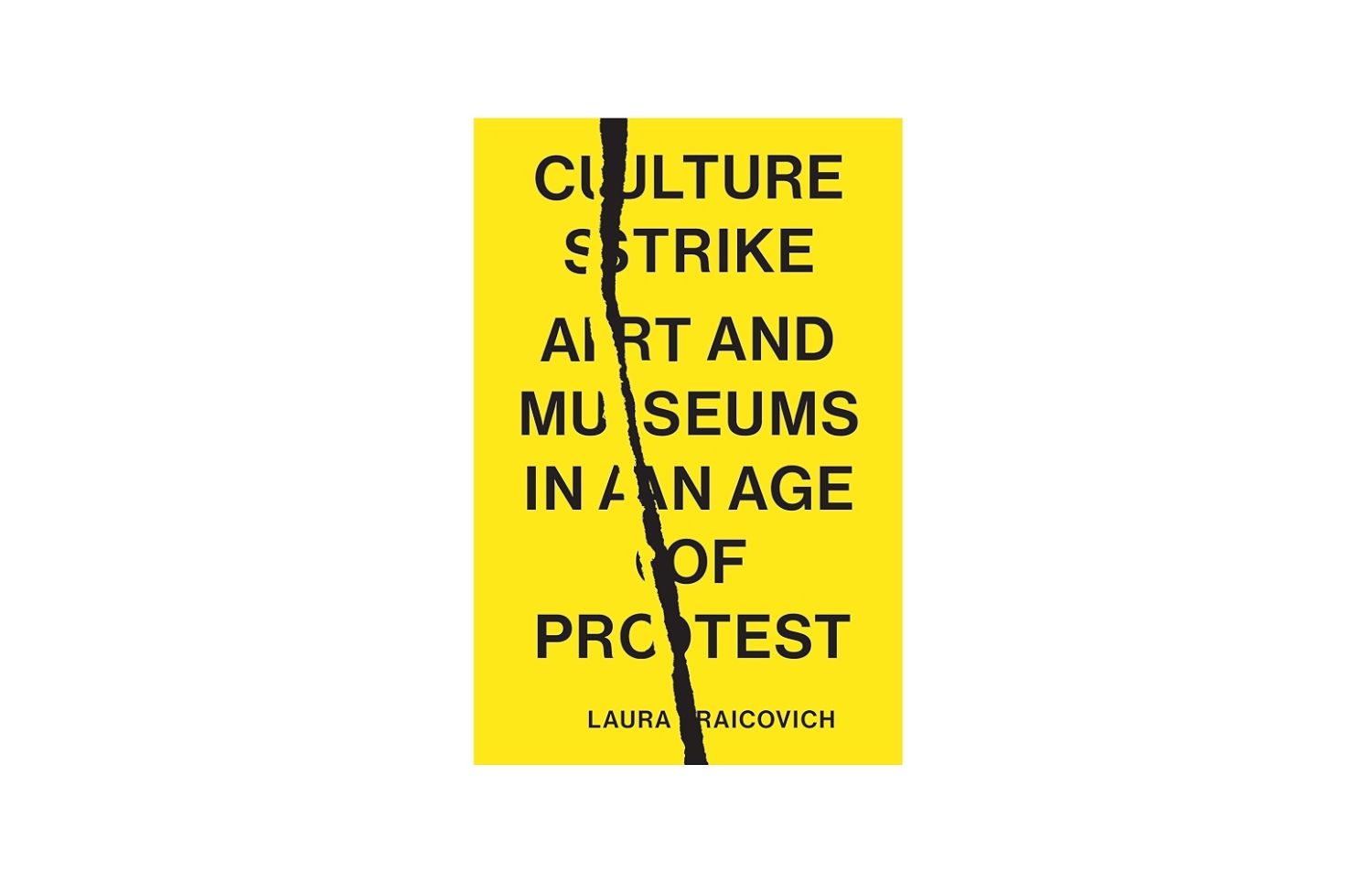 Image: Culture Strike, Art and Museums in an Age of Protest, by Laura Raicovich.
Raicovich’s critique of cultural institutions is also how she shows her deep affection and belief in the potential of museums. Culture Strike ends with,
…a culture that relies less on oppression and exclusion to declare its excellence, and more on the care, generosity, and action to create spaces for contemplation, connection, and perhaps even for revolution.
Labor strikes across major cultural institutions have also made clear the widespread dissatisfaction of staff with their workplaces, no doubt. And while the latest Museums Moving Forward Report, “found a few bright spots” in this area, inequities and burnout continues. It is clear that more work is needed to continue taking care of organizational culture to achieve any real sense of equity in the workplace.
It is also important to highlight the work of AAM's Center for the Future of Museums (CFM) in helping shape a better tomorrow for museums as they navigate many cultural and political challenges including censorship (check out the mission of The National Coalitions Against Censorship and its partners on best practices for managing these and other challenges by transforming them into learning moments and the institution’s ability to address them). See this artist guide.
Before I end, and in thinking back about the Tate Modern, entrance to its gallery and its permanent collection displays are completely free for everyone any given day. Here’s the thing, even dropping the price of general admission will boost visitorship and turn galleries into regular community spaces. The enduring question remains, how to achieve institutional survival and guaranteed equal access for the public good? ¡Sí se puede! To all local museums and beyond, thanks for your completely free, partially free or scheduled free general admission.


Top image: Installation view of रातराणी: The Night Blooming Jasmine, installation detail. Photo courtesy of the artist. Bottom image: Minneapolis Institute of Art Lobby entrance with the description "We're Free. Everyone is welcome. Always."
I beg museums not to lose drawing younger crowds to their galleries by putting up a fight against digital competition (thinking YouTube, Netflix, social media, etc). I am happy and relieved (as someone who works in the arts and as a father) for the great work Mia, Walker Art Center, and TMORA –amongst other museums– is doing with hands-on family and youth programming making available and for free learning opportunities on their campuses.
Cultural engagement can help build empathy, strengthen social bonds, and improve well-being. Engaging in the arts, period, can have remarkable effects on our health. Museums hold a unique position in this context by being able to connect people with their histories, environments, and to a larger knowledge of the world. As museums and other cultural organizations move forward, humility and action will be always needed when acknowledging past mistakes and inequities to build deeper trust with the public.
I’m truly happy to see more and more museums become collaborative spaces and forums for civic connections. What is going on in this country and in the world gives anyone tremendous anxiety, fostering empathy and engaging in community has never been more important.
Minnesota is home to between 200 and 250 registered museums, along with hundred others local and historical entities. For a list of some of Minnesota's most renowned history and culture museums see here. Don’t miss subscribing to the Minnesota Explore newsletter, the official state tourism and economic development promotion agency for Minnesota to learn more.◼︎
See you in two weeks with a new topic. In the meantime, send comments or feedback on this article to: info@mplsart.com.

William Gustavo Franklin is an educator and an independent art curator who teaches art history, criticism, and theory. He has curated more than a dozen exhibits and served as a panelist reviewing applications for grants and artist-in-residence programs. He is also a native Spanish speaker who loves his language and culture. Website
This activity is made possible by the voters of Minnesota through a grant from the Metropolitan Regional Arts Council, thanks to a legislative appropriation from the arts and cultural heritage fund. 
We can't do it without you.
Help keep independent arts journalism alive in the Twin Cities.
We can't do it without you.
Help keep independent arts journalism alive in the Twin Cities.